10 Surprising Insights into What Really Causes Lightning
For centuries, lightning has fascinated and terrified humanity. We know it as a dramatic electrical discharge during thunderstorms, but the true story of its origins is far more complex—and surprisingly connected to events happening a million miles away. Recent research, led by pioneering physicist Joseph Dwyer and others, has revealed that lightning isn't just a simple cloud phenomenon. It involves cosmic rays, high-energy particles from the sun, and even exotic forms of radiation generated within thunderstorms themselves. This listicle dives into ten key breakthroughs that are reshaping our understanding of what causes lightning, from classic cloud physics to mind-bending space weather connections. Prepare to see every flash in a new light.
1. The Classic Recipe: Charge Separation in Storm Clouds
The foundation of lightning is the separation of electrical charges inside a thundercloud. As water droplets, ice crystals, and hailstones collide in the turbulent updrafts, they transfer electrons. Lighter ice crystals become positively charged and rise to the top, while heavier hailstones become negatively charged and sink to the bottom. This creates a giant capacitor with millions of volts between the cloud base and the ground—or between different parts of the cloud. But this classic picture, taught in schools, is only part of the story. The exact mechanisms of charge transfer are still debated, and recent work shows that the process is far more efficient and violent than once thought.
2. Cosmic Rays: The Spark From Outer Space
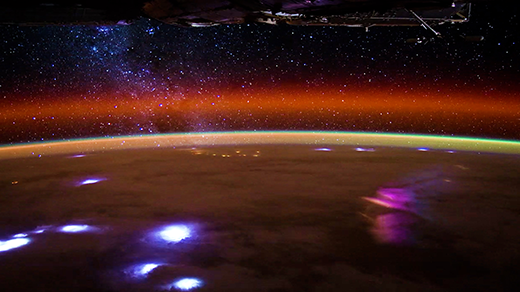
One of the most surprising discoveries comes from Joseph Dwyer and his colleagues: lightning may be triggered by cosmic rays. High-energy particles—mostly protons from supernovae or the sun—zoom through space and smash into Earth's atmosphere. When they collide with air molecules, they create a shower of secondary particles. These particles can ionize a path in the storm cloud, providing a conductive "seed" that allows the electrical field to break down. Without this extraterrestrial nudge, the electric fields in clouds might never become strong enough to initiate a lightning bolt. It's a stunning link between the cosmos and weather on Earth.
3. Relativistic Runaway Breakdown: A Cascade of Electrons
Once triggered, lightning doesn't just happen slowly. Dwyer's work shows that a process called relativistic runaway breakdown accelerates electrons to near-light speed. These high-speed electrons collide with air molecules, knocking off more electrons and creating an avalanche. This runaway effect produces a sudden, intense current—the visible lightning flash. The theory explains why lightning can occur in weaker electric fields than classical physics would predict. It also connects to the production of X-rays and gamma rays, which we'll see next.
4. Terrestrial Gamma‑Ray Flashes: Lightning's Hidden Afterglow
In the 1990s, NASA satellites detected brief, powerful bursts of gamma rays coming from Earth—not from space, but from thunderstorms. These Terrestrial Gamma‑Ray Flashes (TGFs) occur just before or during some lightning strokes. Dwyer's research helped show that TGFs are produced by the same runaway electrons that cause lightning. As these electrons are decelerated by air, they emit high-energy photons. TGFs are so energetic they can blind satellite instruments. They also suggest that every lightning bolt may be accompanied by invisible, dangerous radiation—a fact that challenges our understanding of storm safety.
5. The Role of the Sun: Solar Flares and Lightning Frequency
Dwyer began his career studying solar flares using NASA's Wind satellite. That background proved crucial. He and other researchers have found evidence that solar activity influences lightning rates here on Earth. When the sun emits a coronal mass ejection or a flare, it sends a surge of particles toward our planet. These particles can enhance the cosmic ray flux or alter the ionosphere's conductivity. Statistical studies show that lightning frequency increases slightly after major solar events. It's another layer of complexity: storms on the sun can literally spark storms on Earth.
6. Lightning Is Not Just Downward: Upward Lightning and Sprites
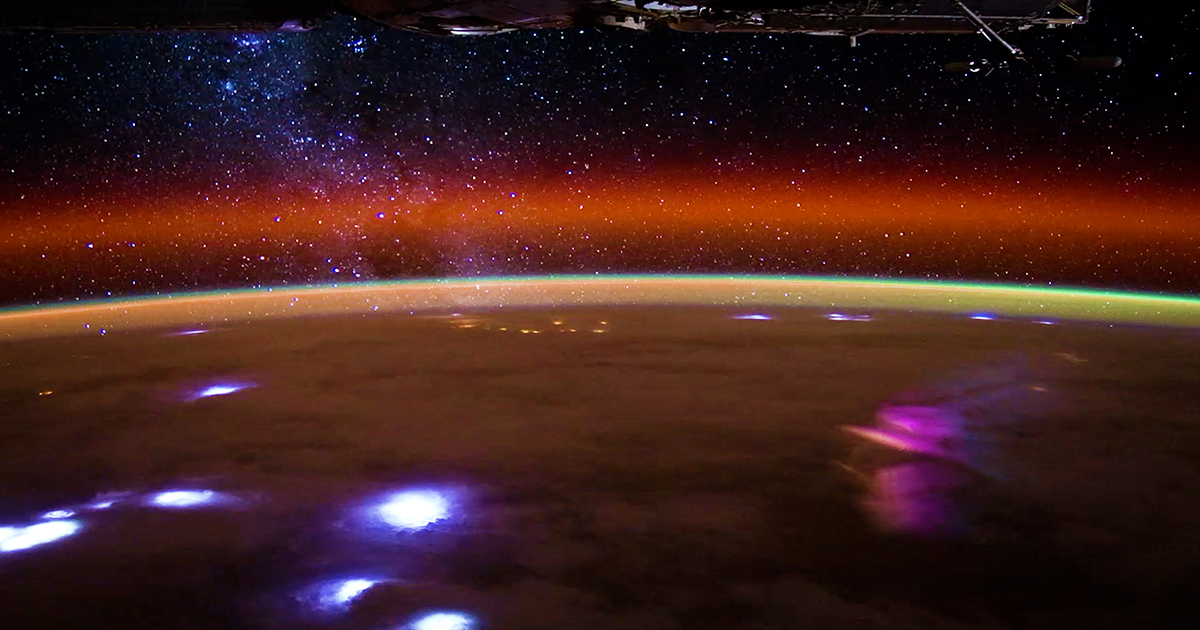
Most people think lightning strikes from cloud to ground. But a large fraction of lightning stays within the cloud or goes upward—into the stratosphere. These upward discharges include blue jets, red sprites, and elves. Sprites, for example, are huge, reddish flashes that occur high above thunderstorms, reaching up to 90 km. They are triggered by the electromagnetic pulse from a strong cloud-to-ground stroke below. Dwyer's models have helped explain how these upper-atmosphere phenomena connect to the charge separation in the thunderstorm below. Earth's lightning is a global, layered system.
7. The Lightning Triggering Problem: Why the Electric Field Is Never High Enough
Classical physics says that lightning should start when the electric field in a cloud reaches about 3 million volts per meter. But measurements show real thunderclouds rarely exceed one-tenth of that value. So how does lightning even begin? This is known as the "lightning triggering problem." The answer, again, involves cosmic rays and runaway breakdown. The presence of high-energy particles allows the discharge to start at much lower fields. Without this external seed, lightning as we know it might not exist. It's a humbling reminder that our atmosphere is not a closed system.
8. Jupiter and Saturn: Lightning in the Solar System
Lightning doesn't just happen on Earth. Spacecraft like Voyager, Cassini, and Juno have detected lightning in the atmospheres of Jupiter, Saturn, and even Venus and Uranus. Jovian lightning is thousands of times more energetic than Earth's. Studying these alien bolts helps astronomers understand the atmospheres of gas giants. But there's a deeper connection: the same relativistic breakdown processes might operate on other planets, shaped by their unique compositions and magnetic fields. Dwyer notes that comparing lightning across worlds tests our theories in extreme conditions.
9. Artificial Lightning: Triggering Strikes With Rockets
To study lightning up close, scientists don't wait for storms. They trigger lightning by launching small rockets trailing a grounded wire into thunderclouds. When the wire is hit, it creates a controlled lightning strike. These experiments have provided invaluable data on current, temperature, and radiation. They also show that lightning is predictable enough to be triggered—but still surprising in its complexity. The triggered lightning technique has helped confirm that X-rays are indeed produced during the initial breakdown stage, lending support to the runaway electron theory.
10. Climate Change and Future Lightning Activity
As the planet warms, thunderstorms may become more frequent and intense. Climate models suggest that for every degree Celsius of warming, lightning strikes could increase by about 12%. This is because warmer air holds more moisture, providing more fuel for storm updrafts and charge separation. More lightning means more wildfires, more nitrogen oxides in the atmosphere, and potentially more dangerous weather. Understanding the fundamental causes of lightning—from cosmic rays to cloud microphysics—becomes essential for predicting how the lightning landscape will evolve in a changing climate.
Conclusion
The question "What causes lightning?" has evolved from a simple answer about static electricity into a rich tapestry of physics that connects our atmosphere to the cosmos. Thanks to the work of Joseph Dwyer and many others, we now know that lightning is shaped by cosmic rays, relativistic particles, gamma‑ray bursts, and even solar storms. Every bolt is a miniature particle accelerator—a natural high‑energy physics experiment happening above our heads. As research continues, we will undoubtedly uncover even more surprises. The next time you see a flash, remember: you're witnessing a cosmic collaboration between Earth and the universe.
Related Articles
- 10 Incredible Facts About the Many Phases of Ice
- The Exodus: 10 Critical Reasons Teachers Are Leaving the Classroom — and What Schools Can Do
- The Silent Saboteur: 10 Critical Insights into the Fast16 Malware
- Curiosity Rover's Atacama Struggle: A Q&A on the Stuck Drill and Remote Science
- Inside San Francisco’s Presidio: Electric Buses Now Dominate Its National Park Fleet
- Redefining Dinosaur Life: New Discoveries Reveal Unexpected Complexity
- Breakthrough AI Solves Decades-Old Mathematical Challenge in Scientific Discovery
- The Truth Behind Centaur: Does AI Really Think or Just Memorize?