Meta Reveals Blueprint for Post-Quantum Cryptography Migration as 'Store Now, Decrypt Later' Threat Grows
Meta Shares Lessons from Post-Quantum Cryptography Overhaul to Guide Industry Transition
MENLO PARK, CA – Meta today published detailed guidance from its multi-year post-quantum cryptography (PQC) migration, urging organizations to accelerate preparations for a future where quantum computers can break current encryption. The social media giant warned that adversaries are already harvesting encrypted data for future decryption in a strategy known as 'store now, decrypt later' (SNDL).

“We’re proposing the idea of PQC Migration Levels to help teams manage the complexity of this transition,” said a Meta cryptographer speaking on background. “Our goal is to help others navigate this efficiently and economically so they can prepare for a future where today’s public-key encryption may no longer be sufficient.”
Background: The Quantum Threat and Industry Standards
Research indicates quantum computers will eventually break conventional public-key cryptography, creating security risk for digital systems. Although experts estimate this could happen within 10–15 years, sophisticated adversaries could collect encrypted data today, anticipating a future where quantum computers can decrypt it – the SNDL strategy.
Organizations like the US National Institute of Standards and Technology (NIST) and the UK’s National Cyber Security Centre (NCSC) have published migration guidance targeting 2030 for prioritizing PQC protections in critical systems. Last year, NIST published the first industry-wide PQC standards, including ML-KEM (Kyber) and ML-DSA (Dilithium). Notably, Meta cryptographers are co-authors of HQC, one of the newly selected PQC algorithms, reflecting the company’s commitment to advancing global cryptographic security.
Meta’s Proactive Approach
With billions of people relying on its platforms daily, Meta has already begun deploying post-quantum encryption across its internal infrastructure over a multi-year process. The company’s migration framework includes risk assessment, inventory, deployment, and guardrails.
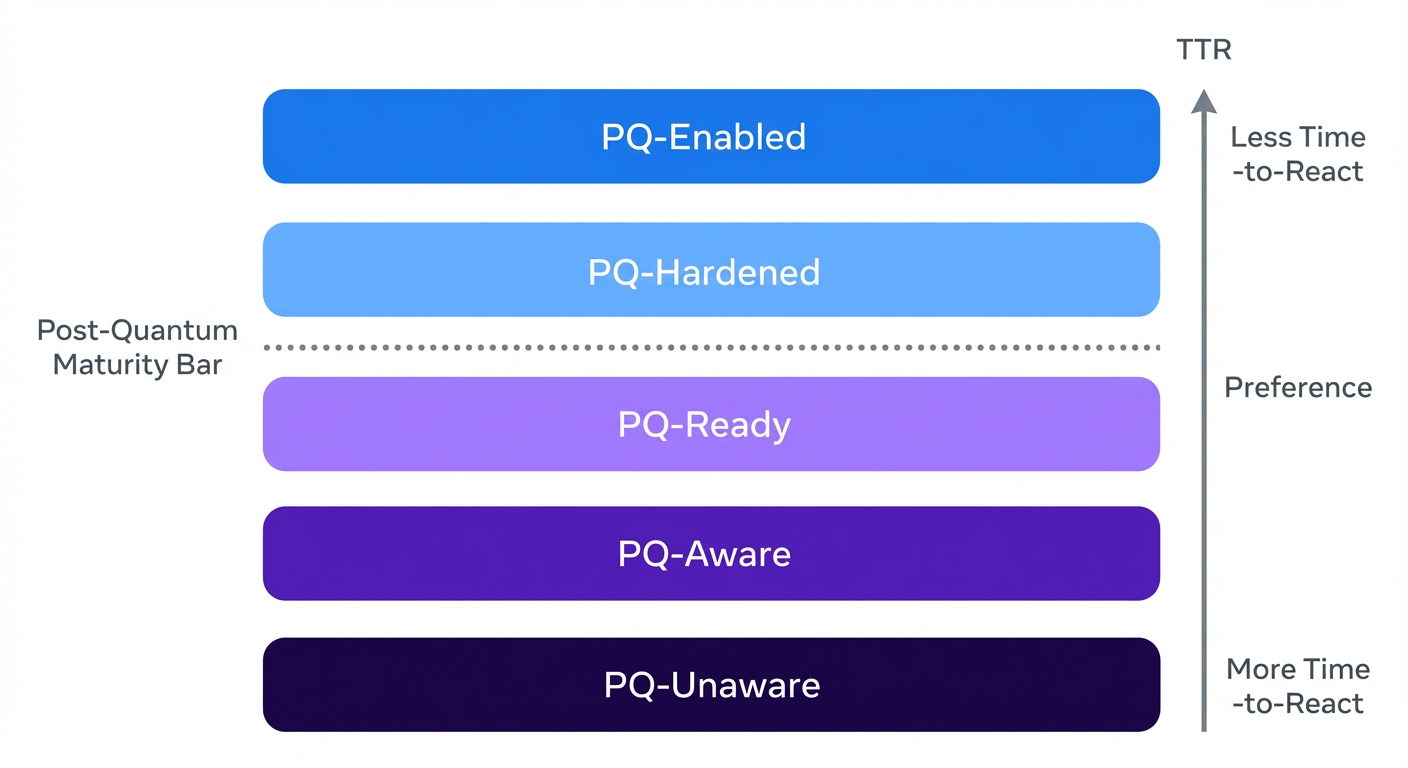
“We maintain strong security and data protection standards now and into the future,” the source added. “Sharing these lessons helps the broader community move toward a PQC-secure future.”
What This Means for Industry
The publication signals that even the largest tech firms see PQC migration as urgent and complex, requiring structured levels of adoption. Organizations of all sizes must begin inventorying cryptographic assets and testing new standards to avoid being caught flat-footed by SNDL attacks.
Experts emphasize that waiting until quantum computers are operational is not an option. “The threat is already here in the form of harvested data,” said the Meta cryptographer. “The time to act is now.”
Meta’s Role in HQC Algorithm
HQC is a code-based candidate selected by NIST for future standardization. Meta’s involvement as co-authors underscores its investment in post-quantum research.
Key Takeaways
- PQC migration must start now due to SNDL threat.
- Meta proposes a structured “PQC Migration Levels” approach.
- NIST standards (ML-KEM, ML-DSA, HQC) provide robust options.
- Organizations should prioritize critical systems by 2030.
Related Articles
- Apple's AI Strategy at WWDC 2026: A New Era of Intelligence and Choice
- 10 Ways Galoy's Bitcoin-Native Platform Is Reshaping U.S. Banking
- Design System 'Dialects' Urged as Rigid Consistency Fails Real-World Users, Experts Warn
- How Ann Arbor’s City-Owned Solar Program Cuts Your Electric Bills
- 10 Smart Reasons to Invest $3,000 in SentinelOne: The Under-the-Radar AI Stock
- Managing Confidential Data in Load Tests: Grafana Cloud k6’s Secrets Management
- Lululemon Faces Crisis as New CEO Pick Triggers Stock Plunge and Founder Backlash
- Years of Research, Not Hype: Inside IBM's AI Coding Tool Bob and Its 80,000 Internal Users