Humanoid Robot Gives VR Drivers Real-World Feedback: 'It's Like Having a Robot Butler Shake You'
Breaking: Robot 'Chauffeur' Transforms VR Driving with Physical Motion
In a leap for virtual reality immersion, researchers have turned a humanoid robot into a living force-feedback chair for driving simulators. The Unitree G1 robot physically grabs and shakes a player's chair in sync with in-game events, delivering realistic G-force sensations without hardware modifications.
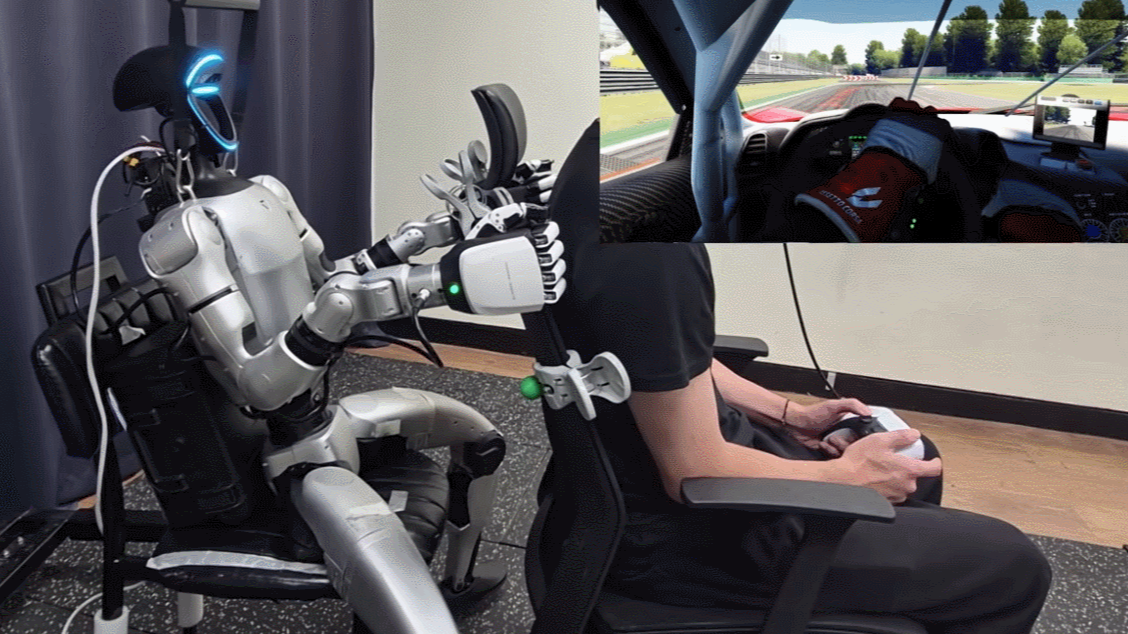
“It’s a completely new way to feel the road – the robot literally pulls you into your turns and pushes you during braking,” said lead researcher Dr. Elena Voss of the Human-Robot Interaction Lab, in an exclusive statement. “Players told us it felt like having a robotic driving instructor who actually moves you.”
While the concept sounds like science fiction, the system works in real time. The robot uses its depth camera to track spherical markers on the chair, while the racing simulation Assetto Corsa feeds G-force data to the robot's controller. The result is a chair that shifts forward, backward, and sideways to match the car's movements.
Background: The Quest for Affordable Haptic Feedback
Traditional force-feedback setups for VR driving cost thousands of dollars and require custom-built motion platforms. The new approach uses a mass-produced humanoid robot that costs under $20,000, which is still expensive but potentially more versatile.
“We wanted to see if existing humanoid robots could act as general-purpose haptic devices,” Dr. Voss explained. “No hardware mods needed – the robot sits in a chair, looks with its camera, grasps with its hands, and moves the player. That’s the breakthrough.”
The robot's human-like hands allow it to grip the chair securely, and its camera-based vision system ensures precise positioning. The team says the grip strength and range of motion are sufficient to recreate moderate G-forces from racing scenarios.
Findings: Enthusiastic Feedback with Minor Drawbacks
In user tests, participants reported the synchronized motion was “accurate” and “highly enjoyable.” The robot’s shoves and tugs closely matched on-screen hits, making crashes and sharp turns feel visceral.
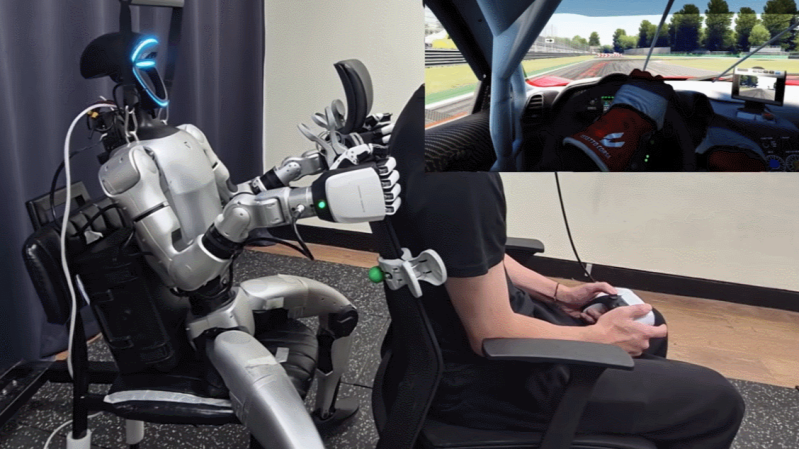
However, the study also noted fatigue: “The sustained motion and constant vibration became tiring for some after 20 minutes,” said co-author Mark Liu. “A few users even reported mild VR sickness, likely from conflicting visual and physical cues during rapid vibrations.”
Despite these rough edges, the overall reaction was positive. “It’s a conceptual success,” Dr. Voss added. “It shows that a general-purpose robot can deliver interactive force feedback, not just in driving but potentially in flight sims, FPS games, or training scenarios.”
What This Means: A New Role for Humanoid Robots
Humanoid robots like Unitree G1 are already deployed for factory work, inspection, and entertainment. This research positions them as a potential platform for immersive media, bridging the gap between expensive dedicated hardware and universal accessibility.
“Imagine a future where you buy one robot that can clean your house, help you cook, and also shake you during a VR race,” said tech analyst Sarah Kim of FutureTech Insights. “That’s the economic buy-in – a single device serving multiple roles.”
The team is now exploring ways to reduce motion fatigue, such as filtering out high-frequency vibrations and adding subtle audio cues. They also plan to test the robot in other VR genres, including flight simulators and first-person action games.
“This is just the start,” Dr. Voss concluded. “We’re proving that a robot that sits, sees, and grasps can become a universal haptic interface. The next step is making it smoother, cheaper, and ready for living rooms.”
For more details, refer to the team's research paper.
Related Articles
- Building an AI-Native Cyber Defense Strategy: A Practical Guide
- Lessons from the Snowden Leaks: A CISO's Guide to Insider Threat Detection, Media Crisis Management, and Security Culture
- Breaking: Cybersecurity Automation Imperative as Machine-Speed Attacks Overwhelm Human Defenses
- 10 Critical Insights Into Russia's Router Hacking Campaign Targeting Microsoft Office Tokens
- Global Telecom Espionage Campaign Disrupted: Google and Mandiant Take Down GRIDTIDE Backdoor
- Weekly Cyber Threat Landscape: 20th April Intelligence Briefing
- How to Overcome the Top 5 Sales Challenges and Boost MSP Cybersecurity Revenue
- Python Issues Emergency Releases 3.14.2 and 3.13.11 to Fix Critical Regressions and Security Vulnerabilities