Using AI Agents to Scale Procurement Expertise: A Q&A Guide
Imagine a procurement manager who oversees supplier requalification for 200 vendors. She relies on delivery trends, quality incidents, and subtle signals like a plant manager’s tendency to overstate defects. But her company has 2,000 suppliers—leaving the other 1,800 without this expert insight. How can AI agents bridge this gap? Below, we answer key questions about scaling human expertise with trusted AI assistants.
1. What specific challenges do procurement managers face when handling supplier requalification at scale?
A senior procurement manager typically monitors about 200 suppliers closely, using both hard data (delivery trends, open quality incidents, contract renewals) and softer signals—like which plant manager habitually overstates a defect versus one who downplays issues. These insights are rarely documented. The core challenge is the volume gap: a company may have 2,000 suppliers, but an expert can only track 200 effectively. Without AI, the remaining 1,800 suppliers receive less attention, increasing risk of missed red flags or lost opportunities for improvement.
2. How can AI agents replicate and scale the expert's judgment?
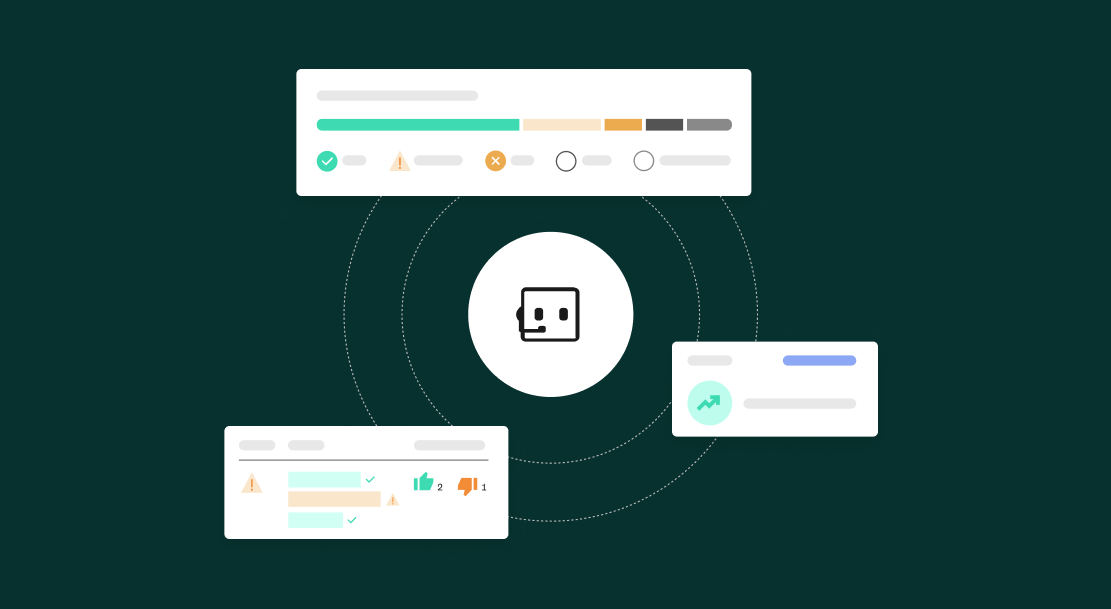
AI agents are trained on the expert's decision patterns, combining structured data (e.g., delivery delays, incident logs) with unstructured inputs such as emails, meeting notes, and even telephone transcripts. By learning to recognize the same “soft signals” the manager uses—like behavioral quirks of plant managers—the AI can apply that expertise consistently across thousands of suppliers. The agent doesn't replace the human but extends their reach, flagging high-risk suppliers for deep review while automating routine assessments.
3. What kind of “soft signals” does a human expert rely on, and why are they hard to automate?
Soft signals include nuanced behavioral patterns—for instance, one plant manager always inflates defect rates to shift blame, while another underreports issues to meet production targets. The expert knows this from experience but rarely writes it down. These signals are context‑dependent and often expressed in natural language across emails, calls, or informal chats. Traditional rule‑based systems can’t capture them. However, advanced natural language processing and machine learning allow AI agents to infer these patterns from historical data, effectively “learning” the unwritten rules of expert judgment.
4. How does an AI agent scale from covering 200 suppliers to 2,000 without losing accuracy?
The AI agent first learns from the expert’s decisions on the initial 200 suppliers, building a model that weighs both quantitative metrics and qualitative cues. Once validated, the agent can be deployed across the full 2,000‑supplier base. It continuously monitors all suppliers, scoring risk levels and flagging anomalies. The expert then reviews only the highest‑priority cases—perhaps the top 10%—effectively widening their oversight tenfold. This approach preserves accuracy because the AI constantly updates its model with new feedback from the expert.
5. What are the main risks or limitations of using AI agents for this task?
Bias absorption is a key risk: if the expert’s judgment contains unconscious biases, the AI may encode them. Also, “soft signals” can change over time (e.g., a new plant manager may behave differently), requiring continuous retraining. Trust also takes time to build—the expert must feel confident that the AI is not making dangerous misclassifications. Finally, data privacy and regulatory compliance (e.g., GDPR) are concerns when processing unstructured communications. Mitigation strategies include regular audits, human‑in‑the‑loop validation, and transparent AI decision logs.
6. Can this approach be applied to other business functions beyond procurement?
Absolutely. The same principle—capturing an expert’s tacit knowledge and scaling it with AI—applies to fields like risk management, sales qualification, customer support triage, and supply chain planning. Any domain where a small number of specialists analyze hundreds of data points and rely on subtle patterns can benefit. For example, a credit officer might use an AI agent to evaluate thousands of loan applications by learning from their own past approvals and rejections. The common thread is combining structured data with the unspoken “feel” that experienced professionals develop over time.
7. How does an organization start implementing trusted AI agents for scaling expertise?
Begin by identifying a domain expert and a well‑defined decision process—like supplier requalification. Collect historical data that includes both explicit records (e.g., incident reports) and soft signal sources (e.g., email threads). Train an AI model on the expert’s decisions, using interpretable algorithms where possible. Deploy the agent in a “shadow mode” first, where its recommendations are compared to the expert’s actual decisions. Gradually increase autonomy as confidence grows. Finally, establish feedback loops so the agent learns from corrections. Successful rollout requires change management and clear communication that the AI is a coworker, not a replacement.
Related Articles
- Spirit Airlines Faces Imminent Shutdown as Federal Bailout Collapses
- SEC Submits Plan to Kill Climate Rule, Sparking Investor Protection Debate
- AirPods Max 2: Amazon's Best Price Yet – Your Questions Answered
- Breaking: Wholesale Power Prices Plunge – No Signal for New Wind and Solar Investment
- White House AI Policy U-Turn Sinks Crypto Czar David Sacks
- How to Decode the Signals from AI Chip IPOs and Networking Giants' Earnings
- Cloudflare IPsec Now Offers Post-Quantum Encryption: A New Milestone in Network Security
- Exaforce Secures $125M to Advance Agentic SOC Platform