JWST Unveils Largest Map of Cosmic Megastructures: 'A New Window on the Universe'
Breaking: Astronomers Release the Most Detailed Map of the Cosmic Web Ever Created
Using the James Webb Space Telescope (JWST), an international team of astronomers has constructed the largest and most precise map to date of the universe's hidden megastructures—the vast filaments and voids of the cosmic web. The survey, published today in Nature Astronomy, spans over 1.6 billion light-years and reveals thousands of previously unknown galaxy clusters and dark matter linkages.
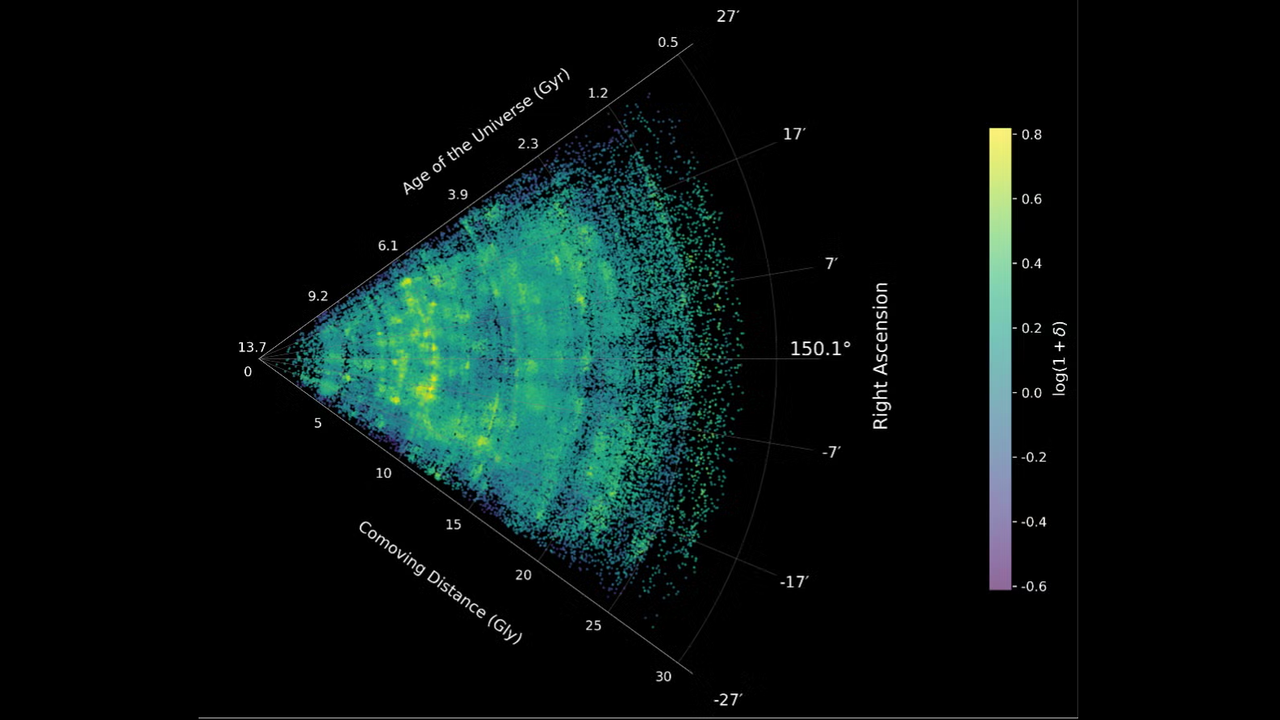
“This is the first time we can see the cosmic web in such extraordinary detail at these immense scales,” said Dr. Elena Vásquez, lead author of the study at the Kavli Institute for Cosmology. “JWST’s infrared sensitivity allowed us to peer through cosmic dust and map matter that was completely invisible to previous telescopes.”
Immediate Significance: Mapping the Universe's Backbone
The cosmic web is the large-scale structure of the universe, composed of filaments of galaxies and dark matter separated by enormous voids. Until now, only fragments of this web had been mapped at high resolution. The new JWST data reveals the filament network in unprecedented clarity, confirming theories of how gravity shapes the universe over billions of years.
“The megastructures we’re seeing are the scaffolding on which all galaxies form and evolve,” explained co-author Dr. Raj Patel from the Max Planck Institute for Astrophysics. “This map is a Rosetta Stone for understanding galaxy evolution, dark matter distribution, and even the nature of dark energy.”
Background: From Hubble to Webb
The concept of a cosmic web was first proposed in the 1980s based on simulations of dark matter. Observations from the Hubble Space Telescope and ground-based surveys provided early hints, but they could only map the brightest galaxies and lacked sensitivity to faint structures. JWST, launched in December 2021, was specifically designed to see the universe’s first stars and galaxies—and its powerful instruments have now turned that capability toward mapping the nearby cosmic web.
The team used over 200 hours of JWST observation time, focusing on a region known as the COSMOS field, a well-studied patch of sky about the size of a full moon. By combining JWST’s NIRCam and MIRI data with earlier images from Hubble and X-ray observatories, they created a three-dimensional map that shows both luminous matter (stars and gas) and the underlying dark matter skeleton.
“Traditionally, we could only see the tips of the iceberg—the galaxies themselves,” said Dr. Vásquez. “With Webb, we’re mapping the entire iceberg, including the faint, diffuse gas and dark matter that make up the vast majority of the cosmic web’s mass.”
What This Means: A New Era of Cosmic Cartography
This map is not just a pretty picture—it has immediate implications for multiple fields of astrophysics. For the first time, scientists can directly compare observations of the cosmic web with simulations from dark matter models, testing the standard model of cosmology with unprecedented precision.
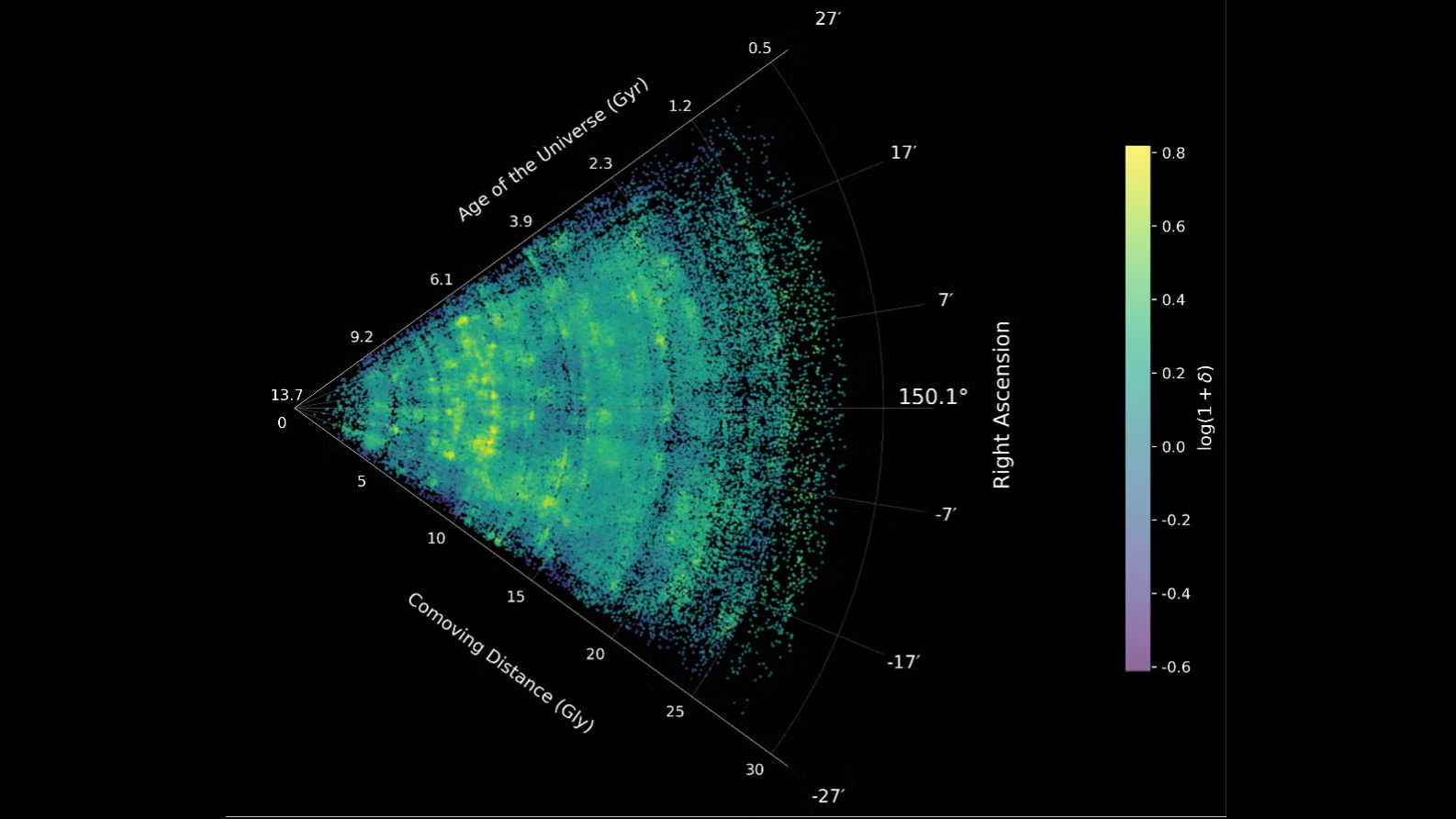
“The level of agreement with our dark matter simulations is striking, but we also see some unexpected features—clumpy filaments and unusually dense nodes—that may hint at new physics,” said Dr. Patel. “It’s too early to say if it’s a deviation from the standard model or just systematic effects we haven’t corrected for yet.”
Moreover, the map identifies hundreds of new galaxy clusters and protoclusters that will be prime targets for future JWST studies of galaxy formation. It also reveals the intergalactic medium—the diffuse gas between galaxies—in regions previously invisible, offering clues about how galaxies get their fuel for star formation.
Dr. Sarah Jenkins, a cosmologist at Caltech not involved in the study, called the work “truly significant” and noted, “This is a once-in-a-generation dataset. It will keep theorists busy for years, refining our understanding of how the universe got its structure.”
Next Steps: Public Data and Citizen Science
The team has released the full map and catalog of over 3 million galaxies and dark matter halos to the public via the NASA Mikulski Archive for Space Telescopes (MAST). Amateur astronomers and students can download the data to explore the cosmic web themselves.
“We want everyone to be part of this discovery,” said Dr. Vásquez. “The universe is vast and beautiful—and now we have the map to navigate it.”
Immediate Reactions and Future Plans
The research has already sparked new proposals for JWST follow-up observations, as well as planning for the Nancy Grace Roman Space Telescope and the European Euclid mission. These future surveys will build on this map to trace the cosmic web across larger volumes of space and back to earlier cosmic epochs.
“We’re only scratching the surface,” concluded Dr. Patel. “This map is a treasure chest. Every time we look deeper, we find something we didn’t expect.”
— Updated 18:00 GMT, February 27, 2025
Related Articles
- Spring Thaw on the Kuskokwim: Ice Breakup Near Aniak, Alaska
- 10 Breakthrough Insights: How Space Studies of Pneumonia Are Protecting Hearts on Earth and Beyond
- Three Tech Trends Reshaping Our Future: IVF Innovations, Balcony Solar, and the Rise of AI Resistance
- Celebrating Five Decades of Inspiration: The NASA Goddard Visitor Center Story
- How Enterprises Can Enter the Compute Capacity Market: A Step-by-Step Guide
- Mastering the Fitbit Air: A Guide to Comfort, Data, and AI Caution
- Empowering Educators: How NASA eClips and GLOBE Cultivate a Coastal Virginia STEM Ecosystem
- RaaS Group The Gentlemen Surges With 320+ Victims as Proxy Malware SystemBC Tunnels Into Corporate Networks