Interlaced 4K on a CRT Monitor: The Feasibility and Setup
For vintage tech enthusiasts, CRTs are not just nostalgic relics; they are high-performance displays with unique advantages. One enthusiast, known as [Found Tech], has pushed the boundaries by driving an IBM P275 CRT monitor at an interlaced resolution of 2880×2160, effectively exceeding its official specs. This Q&A explores how this feat is achieved, the hardware requirements, and what it means for gaming and image quality.
What Exactly Is Interlaced 4K on a CRT?
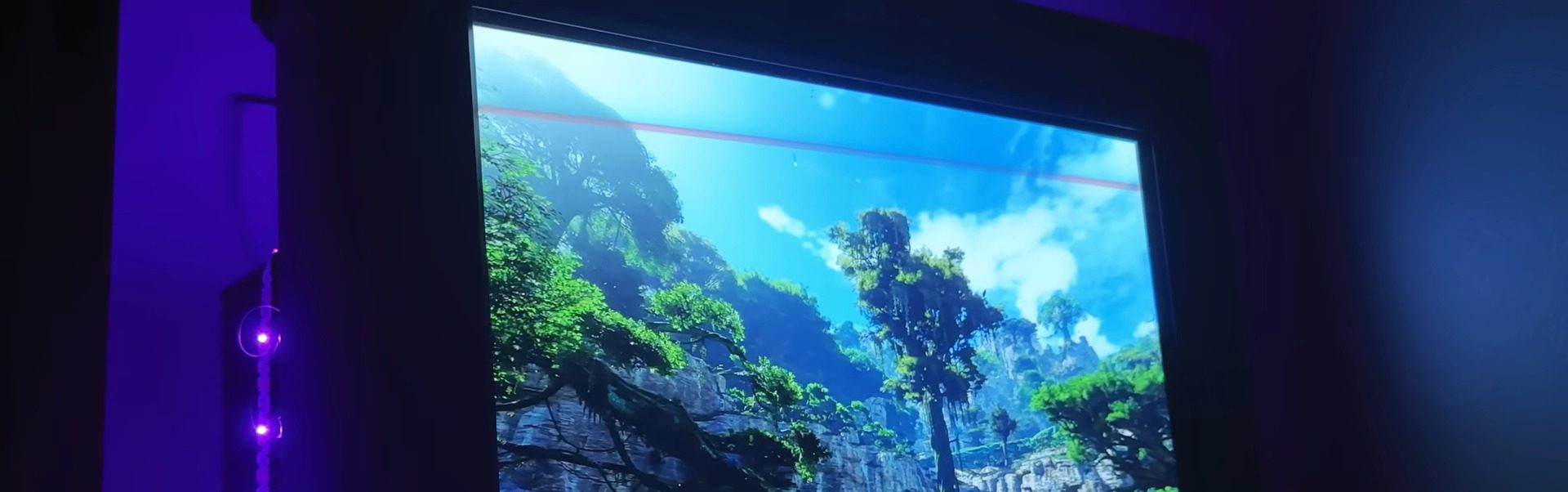
Interlacing is a technique where each frame is split into two fields: odd and even scan lines, displayed alternately. This was common in analog TV to reduce flicker. In this context, [Found Tech] uses interlacing to push an IBM P275 CRT to 2880×2160 resolution—far beyond its rated maximum of 1920×1440. The resulting image is not progressive 4K (2160p at 16:9) but a 4:3 interlaced signal, roughly 4K in total pixel count. The trick lies in convincing the CRT to accept the high-frequency signal, which it does despite official limitations.
Why Can’t Modern GPUs Output Interlaced Signals?
Modern graphics cards from NVIDIA and AMD have dropped interlaced output support in drivers and hardware, focusing entirely on progressive scan. However, Intel integrated GPUs (iGPUs) from certain generations retain the ability to generate interlaced modes—provided you use an older driver. [Found Tech] doesn't specify exact hardware, but the combination involves a compatible Intel chipset and a legacy driver. This niche capability is why he relies on the iGPU solely for display output, not for rendering.
How Does the Dual-GPU Setup Work?
The system uses a discrete graphics card (e.g., NVIDIA or AMD) for rendering games at high resolutions. The rendered frames are then passed to the Intel iGPU via a software or hardware pipeline—often using Windows Display Driver Model (WDDM) or specific capture methods. The iGPU then outputs the interlaced 2880×2160 signal to the CRT. This bypasses the discrete card's inability to generate interlaced signals, while enabling high-performance gaming. The data transfer typically uses a cross-adapter resource sharing feature available in Windows.
Is This Truly 4K Resolution?
Technically, no. The term "4K" refers strictly to a progressive 3840×2160 resolution at a 16:9 aspect ratio. The CRT achieves only 2880×2160 interlaced at 4:3. The total number of lines (2160) matches 4K vertically, but the horizontal resolution is lower, and interlacing introduces combing artifacts. However, [Found Tech] claims that in practice, the image looks comparable to 2160p on his OLED display, thanks to the CRT's deep blacks, fast response, and glowing phosphors. It's a subjective near-4K experience.
What Are the Visible Drawbacks of This Setup?
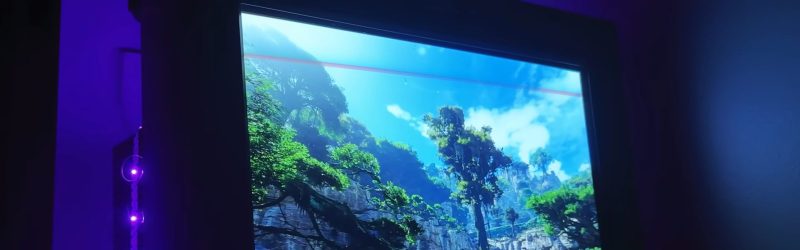
- Interlacing artifacts: Fast motion can cause combing or flicker, especially on fine horizontal lines.
- Low refresh rate: To maintain the high resolution, the CRT likely runs at 30 Hz or less, which can cause noticeable flicker.
- Compatibility: Only older software and drivers support interlaced modes; modern games may require tweaks.
- GPU bottleneck: The iGPU may not handle high refresh rates, and the discrete-to-iGPU transfer adds latency.
Why Bother with a CRT Instead of a Modern OLED?
CRT enthusiasts value the motion clarity (no pixel persistence), infinite contrast, and natural color reproduction. Even at lower resolutions, CRTs can display smooth, artifact-free motion that some prefer over OLED's sample-and-hold blur. Additionally, the glowing phosphors give a unique aesthetic. [Found Tech] states that even at this extreme resolution, the CRT provides a visually pleasing experience that rivals modern screens. It's a niche pursuit for those who chase the last ounce of performance from aging technology.
Can Anyone Replicate This at Home?
Potentially, but it requires specific hardware: a CRT monitor capable of very high horizontal scan rates (the IBM P275 is one of the last high-end CRTs), an Intel iGPU with old drivers, and a discrete GPU for rendering. The exact driver version is not disclosed, so finding the right combination involves experimentation. Also, the user must be comfortable with custom resolution tools (like CRU or NVIDIA Custom Resolution) and possibly modded drivers. It's a challenging but rewarding project for vintage display enthusiasts.
Related Articles
- Your Ultimate Guide to the Next-Gen Xbox Cloud Gaming Controller: Features, Setup, and Optimization
- Nintendo Switch 2 Preorder Deals: Star Fox and Yoshi Discounts & More
- Magic: The Gathering Returns to Middle-Earth: The Hobbit Expansion Q&A
- Invincible Vs Data Mine Reveals Potential Roster Expansion: Exclusive Characters Leaked
- PlayStation 5 Now Runs Linux: Steam Gaming Unlocked on Select Consoles
- Top 10 Android Game and App Deals to Grab This Weekend – Plus Incredible Hardware Savings
- Hasbro Unveils Most Realistic Grogu Animatronic Yet: Preorders Open at $600
- The Unseen Social Price of Weight Loss Drugs: More Judgment, Not Less